
Introduction to Flight Duty Time Limitations (FDTL):
Flight duty time limitations (FDTL) are a critical component of aviation safety, designed to
prevent pilot and crew fatigue, which can significantly impair judgment and performance.
These regulations establish maximum flight times, duty periods, and minimum rest
requirements for flight and cabin crew members. The complexity of FDTL stems from the
diverse operational environments, aircraft types, and crew configurations, necessitating a
robust regulatory framework that balances operational efficiency with the paramount need
for safety.
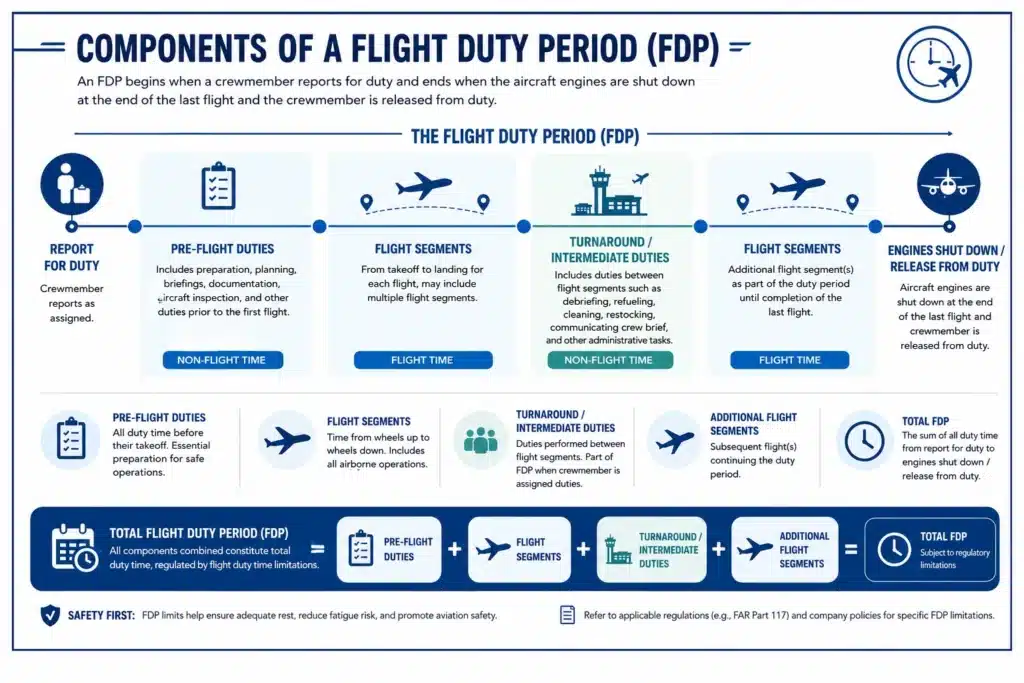
Figure 1: Understanding the various activities that constitute a Flight Duty Period (FDP)
This blog post will delve into the intricacies of flight duty time limitations, exploring the
foundational regulations set by international bodies like the International Civil Aviation Organization and national authorities such as the Federal Aviation Administration in the United States, and various regional civil aviation authorities. We will examine
how these regulations address different crew compositions, the impact of day and night
operations, long-range flights, and the critical aspect of rest periods. Furthermore, we will
discuss the calculation of FDTL, the safety implications of violations, and the provisions for
duty limit extensions under specific circumstances.
International and National Regulatory Frameworks
ICAO Standards and Recommended Practices (SARPs)
The International Civil Aviation Organization provides the global baseline for flight
duty time limitations through its Standards and Recommended Practices (SARPs),
primarily outlined in Annex 6 to the Convention on International Civil Aviation. ICAO Annex
6 mandates that member states establish regulations for flight time, flight duty period, duty
period limitations, and rest period requirements. The core objective is to manage fatigue,
which is recognized as a significant safety hazard 1 .
ICAO emphasizes a two-pronged approach: prescriptive regulations and, increasingly,
Fatigue Risk Management Systems (FRMS). While prescriptive rules set explicit limits, FRMS
allows operators to develop tailored systems to manage fatigue risks, provided they
achieve an equivalent level of safety 2 .
FAA FAR Part 117 (United States)
In the United States, the Federal Aviation Administration governs flight duty time
limitations through Federal Aviation Regulation (FAR) Part 117. This regulation,
implemented to address concerns about pilot fatigue, applies to all flight crew members
conducting passenger operations. FAR Part 117 defines flight duty period (FDP) as the
period that begins when a flight crew member is required to report for duty and ends when
the aircraft is parked after the last flight and there is no intention for further aircraft
movement 3 .
Regional and National Variations
While ICAO provides a global framework, regional authorities like the European Union Aviation Safety Agency and national bodies such as India’s Directorate General of Civil Aviation implement their own detailed flight duty time limitations. These
regulations often build upon ICAO SARPs but introduce specific nuances tailored to their
operational environments. For instance, EASA’s FTL regulations (Regulation 83/2014) have
specific provisions for acclimatization, extended FDPs, and cumulative duty limits 5 . DGCA
India also has comprehensive FDTL rules that define duty time, flight duty time, flight time
limits, and rest period requirements, which are regularly updated to align with
international best practices and address local operational challenges 6 .
Crew Configurations and Their Impact on FDTL
The type of crew configuration significantly influences flight duty time limitations,
especially for long-haul operations. The primary goal is to ensure that sufficient crew
members are available to maintain alertness and performance throughout extended duty
periods.
Single Set, Double Set, and Augmented Crew
Single Set Crew
This refers to the minimum required flight crew (e.g., two pilots for a
typical commercial flight). Their FDTL are the most restrictive, as there are no
provisions for in-flight rest.
Double Set Crew (Augmented Crew)
For longer flights, an augmented crew, often
referred to as a
double set or augmented crew, is utilized. This typically involves adding one or more
pilots to the standard crew complement, allowing for in-flight rest periods. The FDTL for
augmented crews are extended, but specific conditions apply regarding the number of
additional crew members, the quality of in-flight rest facilities, and the duration of the
flight 7 .
Supy Crew and Deadhead Crew
Supy Crew (Supernumerary Crew)
This term generally refers to crew members who
are on board but not actively performing flight duties. They might be undergoing
training, repositioning, or simply observing. While not actively flying, their presence on
board can still contribute to their overall duty period, depending on the specific
regulations of the operating authority 8 .
Deadhead Crew
Deadheading refers to the transportation of a crew member as a
passenger to a different location to begin or end a flight duty period. While
deadheading, the crew member is not operating the aircraft, but this time is often
considered part of their duty period, albeit with different limitations than active flying.
Regulations typically specify how deadhead time counts towards FDP and rest
requirements 9 .
Operational Considerations: Day, Night, and Long-Range Flights
Flight duty time limitations are significantly influenced by the time of day and the nature
of the flight (e.g., long-range, multiple sectors).
Day and Night Limits
Operating during night hours poses a higher fatigue risk due to circadian rhythm
disruption. Consequently, FDTL regulations often impose stricter limits on FDPs that
encroach upon or occur entirely within the Window of Circadian Low (WOCL), typically
defined as the period between 02:00 and 05:59 local time. FDPs that start or end during the
WOCL are generally shorter than those conducted entirely during daytime hours 10 .
Night Landings
The number of night landings can also be a factor in some FDTL regulations, as night
operations, particularly landings, require heightened alertness and can contribute to
increased fatigue. While not universally codified as a direct FDTL calculation input, it is an
operational consideration that airlines and regulators monitor for fatigue risk.
Long-Range Flights and Rest Time
Long-range flights inherently involve extended duty periods. To manage fatigue effectively,
these flights necessitate augmented crews and carefully planned rest periods. The
minimum rest period before an FDP is crucial, ensuring that crew members are adequately
rested before commencing duties. This typically involves a minimum of 10 hours of rest,
including an opportunity for 8 uninterrupted hours of sleep 4 . For long-range flights with
augmented crews, in-flight rest facilities must meet specific standards to allow for effective
rest during the flight 7 .
Leave Types and Their Impact on FDTL
Various types of leave can impact a crew member’s availability and FDTL calculations.
While specific rules vary by airline and region, the general principle is to ensure that leave
periods contribute to adequate rest and recovery.
Sick Leave, Casual Leave, and Annual Leave
Sick Leave
Time off due to illness. While not directly impacting FDTL calculations for
active duty, prolonged sick leave requires medical clearance before returning to flight
duties, ensuring the crew member is fit to fly and not fatigued from illness or recovery.
Casual Leave
Short-term leave for personal reasons. Similar to sick leave, it doesn’t
directly alter FDTL formulas but affects scheduling and ensures crew members have
personal time for recovery.
Annual Leave
Extended periods of planned time off. Annual leave is essential for long-
term fatigue management and allows crew members to fully recuperate. Regulations
often mandate a minimum number of annual leave days to be taken consecutively to
ensure adequate rest.
Calculating Flight Duty Time Limitations (FDTL)
The calculation of FDTL is complex and depends on numerous factors, including report
time, number of sectors, time zones crossed, and crew augmentation. While specific
formulas vary by regulatory authority, the general principles involve tables and algorithms
that adjust maximum FDP based on these variables.
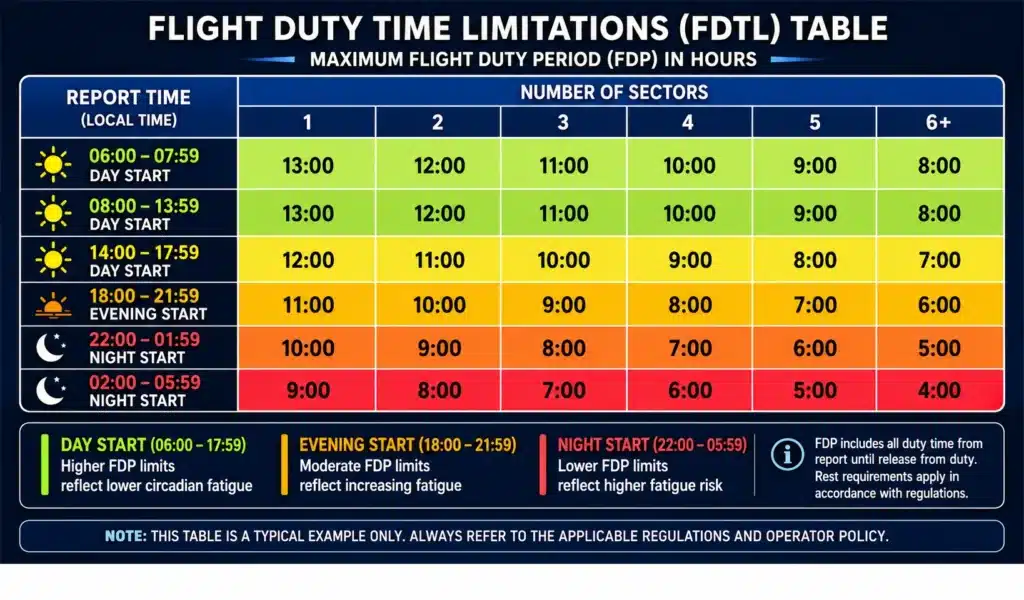
Figure 2: A typical FDTL table illustrating how maximum duty periods
vary by report time and sector count
General FDTL Calculation Principles
A simplified representation of FDTL calculation often involves:
Maximum FDP = Base FDP – (Reduction for Night Operations) + (Extension for Augmented Crew) –
(Reduction for Multiple Sectors)
This formula is a conceptual simplification. Actual FDTL calculations involve detailed tables
and rules. For example, under FAA FAR Part 117, the maximum FDP is determined by a table
that considers the scheduled start time of the FDP and the number of scheduled flight
segments. This base FDP is then adjusted for factors like acclimatization and augmented
crew 3 .
Example (Conceptual, not a precise regulatory formula)
Consider a base FDP of 10 hours for a single-pilot crew starting at 08:00 local time with 2
sectors. If the FDP starts during the WOCL (e.g., 03:00), the base FDP might be reduced to 8
hours. If an augmented crew is used, the FDP could be extended by a certain number of
hours, provided specific rest facilities are available. Each regulatory body provides detailed
tables and rules for these calculations 4 5 6 .
Safety Involvement if Violation
Violations of flight duty time limitations pose significant safety risks. Fatigue can lead to:
- Reduced Alertness and Vigilance: Impaired ability to monitor instruments, respond to
unexpected events, and maintain situational awareness. - Slowed Reaction Time: Delayed responses to critical situations, such as emergencies
or air traffic control instructions. - Impaired Decision-Making: Poor judgment and increased likelihood of errors.
- Microsleeps: Brief, involuntary episodes of sleep that can occur without warning,
leading to complete loss of awareness.
Regulatory authorities impose severe penalties for FDTL violations, including fines,
suspension of operating certificates, and even criminal charges in cases of gross negligence.
The primary goal of these penalties is to deter non-compliance and reinforce the
importance of fatigue management in maintaining aviation safety.
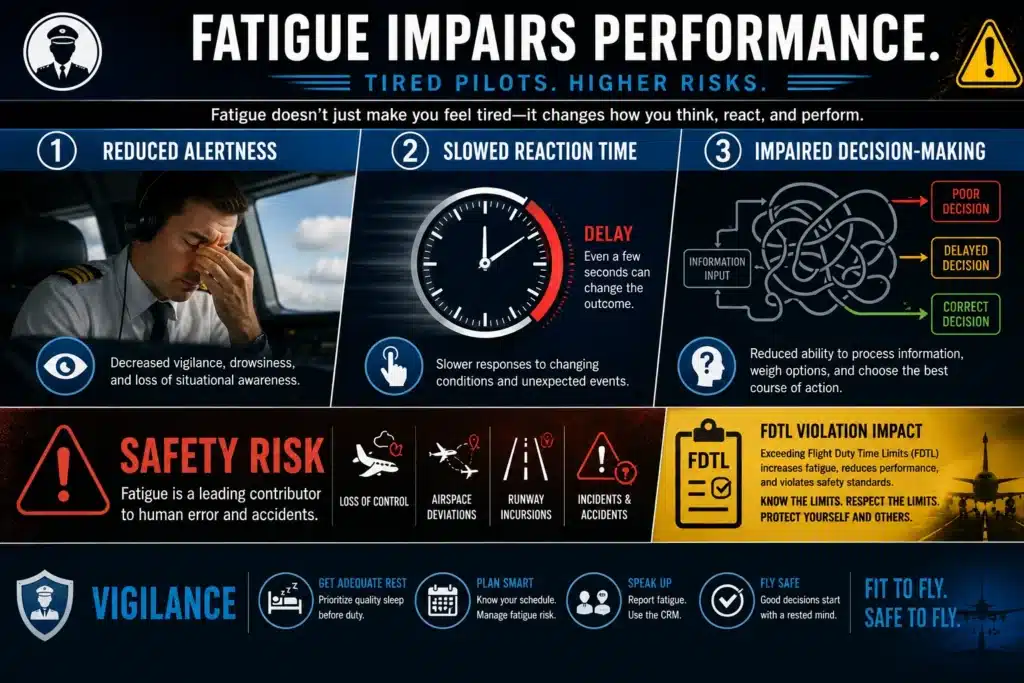
Figure 3: The critical impact of fatigue on safety and the necessity of strict FDTL adherence
Flying and Duty Limits: Monthly and Annual
Beyond daily FDP limits, regulations also impose cumulative limits on flying and duty hours
over longer periods to prevent chronic fatigue.
- Monthly Flying Limit: Typically, there are limits on the maximum flight hours a crew
member can accumulate within a 28-day or calendar month period (e.g., 100 hours
under FAA FAR Part 117 3 ). - Annual Flying Limit: Similarly, there are limits on the maximum flight hours over a 365-
day period (e.g., 1,000 hours under FAA FAR Part 117 3 ). - Duty Limit: Some regulations also include cumulative duty limits over periods like 7,
14, or 28 days, encompassing all duty activities, not just flying 5 .
These cumulative limits ensure that crew members receive sufficient recovery time over
extended periods, preventing the build-up of fatigue that could compromise safety.
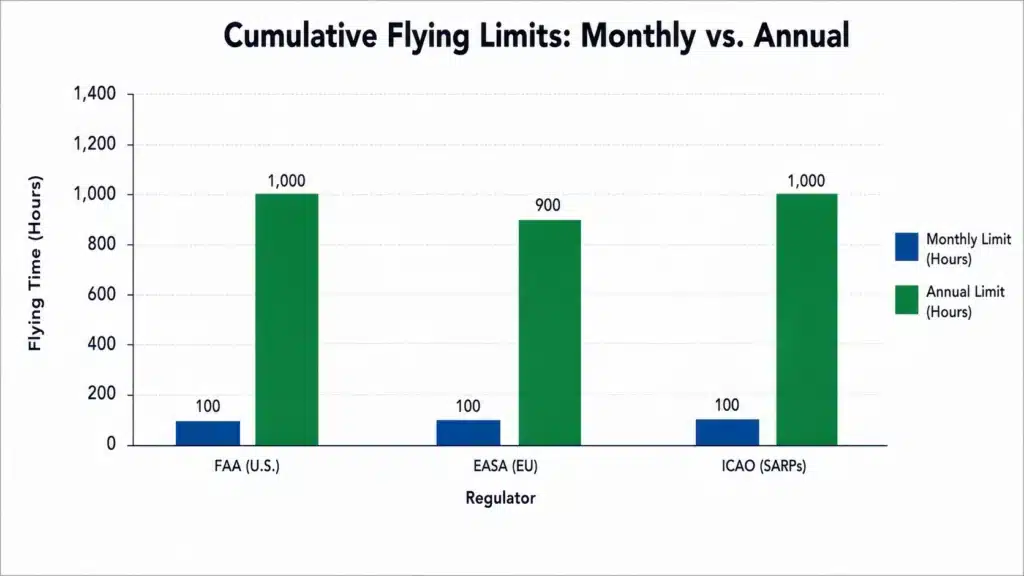
Figure 4: A comparison of monthly and annual flying limits across major regulatory frameworks
Duty Limit Extension and Waiver Authority
While FDTL regulations are strict, provisions exist for duty limit extensions under specific,
unforeseen circumstances, always with safety as the paramount concern.
Emergency Enroute Landings, Bad Weather, and Technicals
Situations such as unexpected bad weather, technical issues with the aircraft, or
emergency enroute landings can necessitate an extension of a crew member’s FDP. These
extensions are typically limited in duration and require careful consideration of the crew’s
fatigue levels. The decision to extend duty is usually made by the pilot-in-command (PIC) in
consultation with the airline’s operations control, with strict reporting requirements to the
regulatory authority 6 .
Waiver Authority for Duty Extension
Regulatory authorities, such as the Federal Aviation Administration or Directorate General of Civil Aviation, may grant waiver authority for duty
extension in exceptional circumstances. These waivers are not routine and are typically
granted only when there is a compelling operational need and the operator can
demonstrate that an equivalent level of safety can be maintained through specific
mitigation strategies. This might involve additional rest periods, increased crew
complements, or enhanced fatigue monitoring. The process for obtaining such waivers is
rigorous and requires detailed justification and approval from the relevant authority 6 .
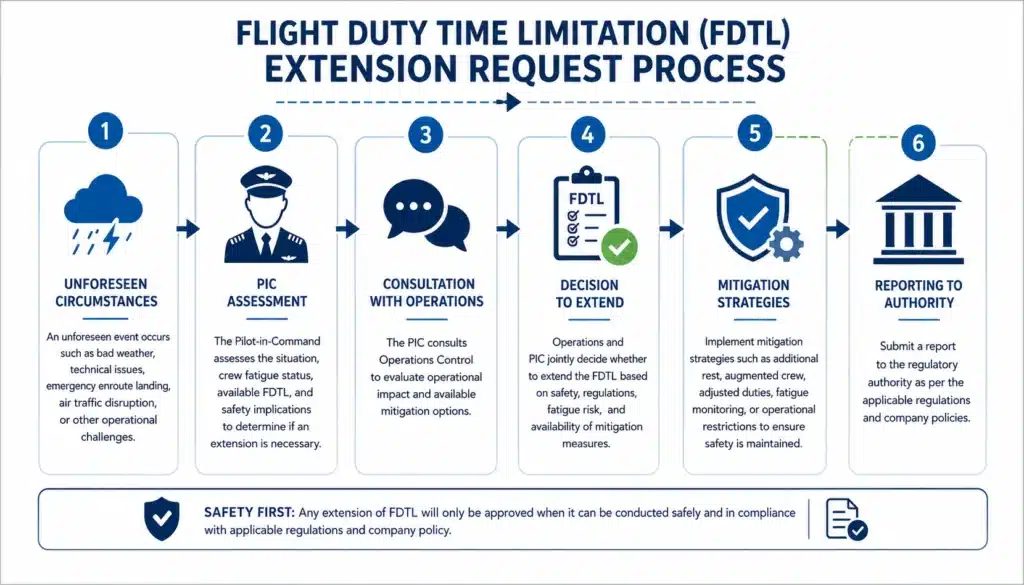
Figure 5: The procedural steps involved in requesting a duty limit extension during unforeseen operational challenges
Conclusion
Flight duty time limitations are a cornerstone of aviation safety, meticulously designed to
mitigate the risks associated with pilot and crew fatigue. The complex interplay of
international standards, national regulations, crew configurations, and operational
variables underscores the comprehensive approach required to manage fatigue effectively.
From the prescriptive rules of ICAO and FAA to the nuanced considerations for day/night
operations, long-range flights, and various crew types, every aspect is geared towards
ensuring that flight crews are adequately rested and alert to perform their duties safely.
Adherence to FDTL is not merely a regulatory compliance issue; it is a fundamental
commitment to the safety of passengers and crew. While provisions for duty extensions
exist for unforeseen circumstances, these are carefully controlled and subject to stringent
oversight, always prioritizing the prevention of fatigue-related incidents. As the aviation
industry continues to evolve, so too will the flight duty time limitations, adapting to new
operational challenges while steadfastly upholding the highest standards of safety.